
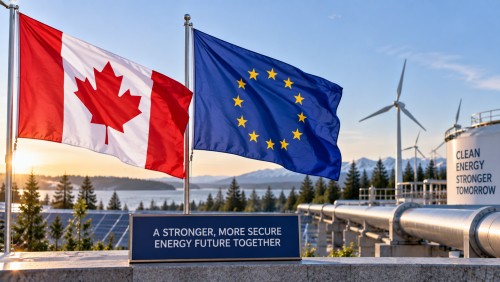
Europe could soon bolster its energy security and reduce its dependence on Russian supplies through a potential partnership with Canada. This collaboration aims to enhance the energy relationship between Canada and the European Union, focusing on exchanging resources and technology to meet Europe’s energy demands.
During discussions in Strasbourg, Canadian Prime Minister Mark Carney engaged with EU leaders to explore ways Canada could help Europe diversify its energy portfolio. While Canada has vast reserves of oil and natural gas, the country’s infrastructure primarily supports exports to its West Coast, limiting direct shipments to Europe. Developing new facilities on the East Coast for such exports might take several years.
To bridge this gap, Canada and the EU are considering energy swap agreements. This would involve redirecting Canadian energy shipments originally intended for Asian markets to Europe, granting European countries access to Canadian resources without necessitating direct transatlantic shipping routes.
The scope of this partnership could extend beyond traditional fossil fuels. Canada has the potential to supply critical minerals essential for Europe’s transition to clean energy, aiding in the development of renewable energy sources and low-carbon technologies. Such cooperation would strengthen both economic and strategic ties between the two regions.
By integrating energy trade, critical minerals, and clean-energy development, Canada and the EU aim to forge a sustainable relationship that supports the long-term energy goals of both partners, signaling a significant shift in their economic and environmental strategies.