
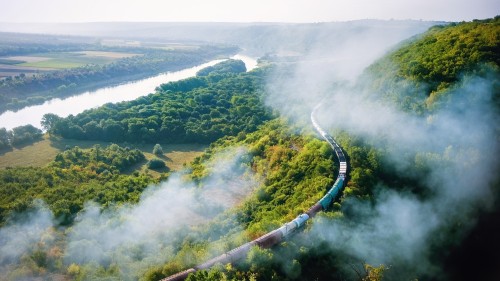
Europe offers some of the most breathtaking rail journeys, with routes that provide stunning coastal views, cross majestic estuaries, and traverse dramatic seaside landscapes. In Scotland, the railway connecting Inverness and Kyle of Lochalsh showcases both the North Sea and Atlantic coastlines. This journey takes travelers through the remote Highlands, culminating in the scenic shores of Loch Carron, where panoramic vistas of islands, sea lochs, and the rugged Applecross Peninsula await.
Ireland’s railway from Dublin to Arklow offers another picturesque coastal experience. This line follows a particularly scenic stretch of coastline, running alongside the Irish Sea just south of Dún Laoghaire. It then passes beneath the iconic Bray Head before continuing through the charming landscapes of County Wicklow, making it a favorite among those seeking Ireland’s natural beauty.
Germany’s train route from Husum to the island of Sylt provides a unique travel experience as it crosses the Hindenburg Causeway over the Wadden Sea. This journey is renowned for its marshlands, coastal scenery, and dramatic views of the sea, especially captivating during high tides or stormy weather. The route offers a glimpse into Germany’s diverse coastal environment.
In Spain, the railway between Ribadeo and Ferrol in the Galicia region winds along the rugged Atlantic coastline. This route is marked by cliffs, estuaries, and traditional fishing communities, offering striking views of Galicia’s well-known rías, or coastal inlets. Despite its lesser-known status, it remains one of Spain’s most scenic rail journeys, promising travelers an authentic taste of Galicia’s dramatic landscapes.
In Southern Italy, the Ionian Railway, which runs from Reggio di Calabria to Soverato, is noted for being one of Europe’s closest-to-the-sea train routes. Much of the journey is spent alongside the coastline, providing uninterrupted views of the Ionian Sea, sandy bays, and traditional Calabrian villages. These spectacular routes continue to captivate rail enthusiasts and travelers who prefer a slower, more scenic way to explore Europe’s diverse coastal landscapes.