
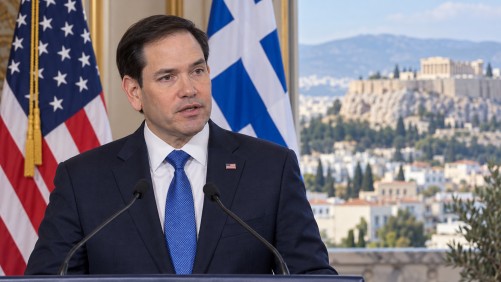
U.S. Secretary of State Marco Rubio’s visit to Greece is poised to bolster defense and strategic cooperation between the two nations, with discussions focusing on various crucial sectors. Arriving on Tuesday, Rubio’s trip aligns with the sixth round of the Greece-U.S. Strategic Dialogue, set to take place on Wednesday at the Greek Foreign Ministry. The talks aim to enhance collaboration in regional security, defense, energy, and technology, among other areas.
A significant portion of the dialogue is expected to concentrate on defense agreements, including the acquisition of missiles and self-protection systems for Greece’s F-35 aircraft and upgraded F-16 Viper jets. Additionally, discussions are anticipated to cover support for military equipment like Black Hawk and MH-60R helicopters, underscoring the deepening military ties between the two nations.
Beyond defense, the two countries are likely to sign agreements on cultural and professional exchanges, such as the protection of archaeological materials and mutual recognition of seafarers’ professional certificates. The cooperation between the Greek Armed Forces and the U.S. National Guard is also on the agenda, reflecting a multifaceted approach to strengthening bilateral relations.
Rubio’s itinerary includes a meeting with Greek Prime Minister Kyriakos Mitsotakis, where they are expected to discuss strategies to reduce reliance on China by expanding cooperative ventures between Greece and the United States. This move aligns with broader geopolitical objectives and economic considerations.
The visit and subsequent dialogue sessions emphasize a shared commitment to addressing regional and global challenges through strengthened partnerships. As Greece and the United States explore these collaborative avenues, the outcomes could have significant implications for both nations’ strategic and economic interests in the region.