
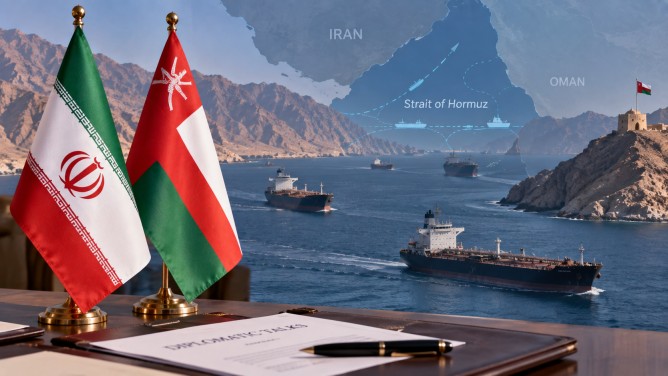
A critical meeting aimed at discussing new shipping arrangements through the Strait of Hormuz involving Iran, Oman, and other Gulf nations has been postponed without a new date set. The gathering, which was to occur in Muscat, was intended to address regional security concerns and explore an Iran-Oman proposal for overseeing commercial shipping through this strategically crucial passage. The postponement was confirmed by Oman’s Foreign Minister Badr Albusaidi, who cited the need for consensus as the reason for the delay. Iran corroborated this decision, stating it was a joint conclusion with Oman after several regional countries requested the postponement.
The delay followed an incident involving an Iranian commercial vessel near Qeshm Island, where a reported projectile strike resulted in one fatality and injuries to four crew members. Iranian state media reported the vessel was struck while in transit through the Strait of Hormuz, leading to a fire and the subsequent evacuation of its crew. Amid these developments, Iran and Oman had been in discussions regarding alternative shipping routes through the Strait. The proposed plan suggested that vessels entering the Persian Gulf would navigate through Iranian waters, while those exiting would utilize both Iranian and Omani waters.
Iran has emphasized that any reopening of the Strait of Hormuz would be contingent on its conditions being met, including the possibility of charging vessels fees for using these proposed routes. Despite these plans, commercial traffic through the Strait remains notably reduced. Given the Strait’s significance as one of the world’s most vital channels for oil transportation, ongoing disruptions are a substantial concern for global energy markets.
This postponement occurs amid escalating diplomatic tensions in the Gulf region. Saudi Arabia has reportedly expressed the desire for changes to the proposed Iran-Oman shipping arrangement, while Bahrain has declared its non-participation in the meeting. The uncertainty surrounding the Strait of Hormuz has contributed to a spike in oil prices, with Brent crude climbing above $100 a barrel. These rising prices are further exacerbated by Saudi Arabia’s decision to keep its 1,200-kilometer East-West oil pipeline closed following drone attacks, which limits an alternative route for transporting crude to the Red Sea.
The extended closure of this pipeline poses a risk to a significant portion of global oil supplies, adding to the disruptions already caused by decreased shipping through the Strait of Hormuz. As tensions persist in the region, the energy market remains on edge, closely monitoring developments that could further impact oil supply routes and prices.